Everything You Need to Know About What Is Generative Engine Optimization Geo
Learn what is generative engine optimization GEO, how AI search engines retrieve data, and the exact steps to rank in ChatGPT, Perplexity, and Google AI.

What Is Generative Engine Optimization GEO: The Technical Guide
Search behavior is undergoing its biggest architectural shift since the invention of web crawlers. If you want your content cited by Perplexity, ChatGPT, and Google AI Overviews, you need to understand what is generative engine optimization geo and how these systems pick sources.
Generative engine optimization (GEO) is the practice of adjusting web content so that large language models and retrieval systems cite, quote, and reference your pages when answering user prompts. While traditional search optimization focuses on ranking ten blue links on a results page, GEO focuses on making your data the primary source for direct AI responses.
This guide breaks down how AI engines retrieve information, the mathematical and editorial differences between classic ranking and AI citations, and the exact framework to position your site as a top reference.
How Generative Engines Process and Retrieve Content
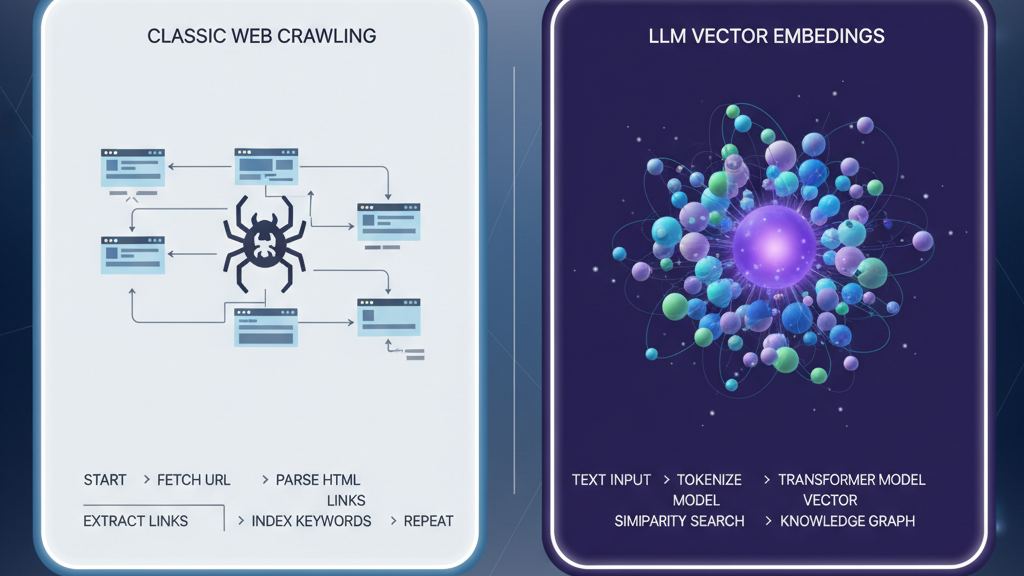
Traditional search engines build inverted indexes. When a user enters a query, the search engine matches keywords against documents, evaluates backlink signals like PageRank, and returns an ordered list of URLs.
Generative engines work differently. They rely on Retrieval-Augmented Generation (RAG) to combine vast pre-trained models with real-time web retrieval. When a user asks a complex question, the engine executes several distinct steps:
- Query Decomposition: The system breaks the user prompt into sub-queries to capture multiple angles of the topic.
- Vector and Keyword Retrieval: The engine queries web indices using semantic vectors (embeddings) and keyword matching to find candidate pages.
- Passage Reranking: The system scores extracted chunks of text based on relevance, factual clarity, and authoritativeness.
- Context Window Injection: The top-ranked passages are loaded directly into the context window of the language model.
- Answer Generation with Citations: The model generates a direct response, citing the specific URLs that provided the supporting data.
Researchers from Princeton University, Georgia Tech, and the Allen Institute for AI documented these exact mechanics in their research paper on Generative Engine Optimization. Their findings showed that websites adjusting their content structure for AI retrieval increased their visibility in synthetic answers by up to 40%.
GEO vs Traditional SEO: Core Differences
GEO does not replace search engine optimization. It builds on top of it, but the signals that prompt an AI engine to cite your content differ from the signals that put a URL at position one in standard search.
| Attribute | Traditional SEO | Generative Engine Optimization (GEO) |
|---|---|---|
| Primary Goal | Rank URLs in search engine result pages (SERPs) | Earn direct citations and quotes inside AI responses |
| Target Metric | Organic clicks, impressions, rank position | Citation share, brand mentions in prompts, referral clicks |
| Content Unit | Entire page or document | Specific factual passages, tables, and data blocks |
| Query Matching | Exact match and semantic keyword entities | Conceptual embeddings and multi-hop reasoning |
| Authority Signal | Domain authority, backlinks, anchor text | Factual consensus, named entity recognition, primary data |
| User Outcome | User clicks through to read the page | User gets direct answers; clicks to verify details |
In standard search, a reader visits your website to find an answer. In generative search, the model extracts your answer and displays it inside the interface. Clicks happen when users require verification, source attribution, deeper tooling, or interactive assets.
Core Principles for Generative Engine Optimization
To make your content visible to AI retrieval engines, you must format your text so language models can extract clear, high-confidence facts without ambiguity.
1. High Fact Density and Clear Subject-Predicate Structures
Large language models assign high probabilistic scores to unambiguous statements. Vague introductions, filler adjectives, and narrative padding make passage extraction harder for reranking algorithms.
Structure your explanations with direct statements:
- State the definition within the first sentence of an informational section.
- Use clear subject-verb-object syntax.
- Avoid passive phrasing that obscures who did what.
- Place specific numbers, percentages, dates, and names directly adjacent to the topic entity.
2. Structured Data and Machine-Readable Schema
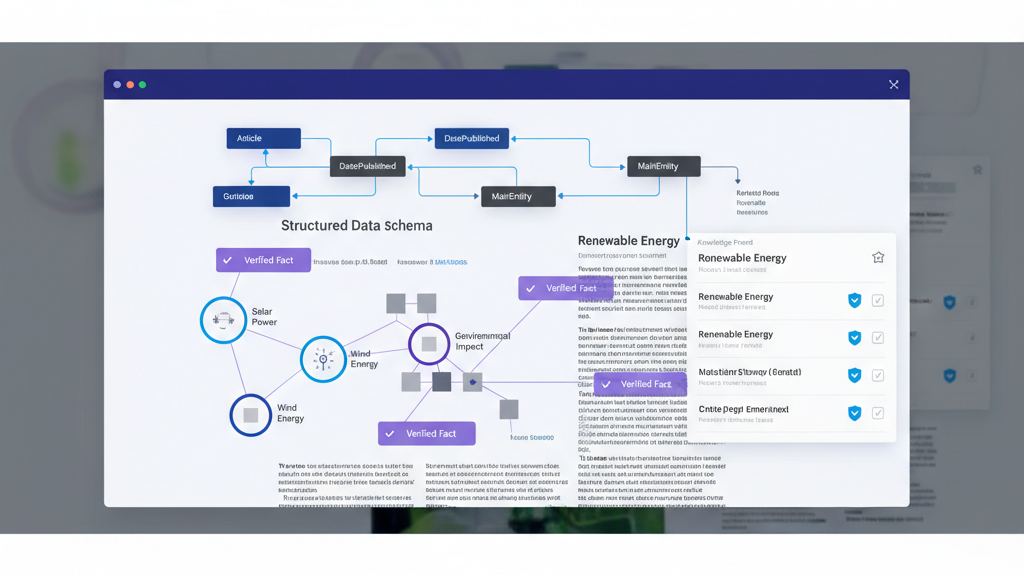
AI retrieval agents process clean semantic structures faster than unformatted text. Adding structured data using the official W3C JSON-LD specification gives automated scrapers unambiguous metadata about your author, organization, product, and main topic.
Use structured formats across your articles:
ArticleandTechArticleschemas for editorial content.FAQPageschema for question-and-answer blocks.Datasetschema when publishing original industry data sets.- Markdown tables and nested lists inside the page body to format comparisons.

3. Factual Quotations and Named Citations
Princeton's research revealed that adding direct quotes from recognizable authorities and citing primary studies produces the single highest lift in generative search visibility. When a page references recognized experts, LLMs view the passage as an authoritative summary rather than unsupported opinion.
Always link out to primary sources and standard bodies. Follow the guidelines published in Google's Search Central documentation on helpful content, which emphasizes clear attribution and first-hand experience.
4. Technical Term Coverage (N-gram Completeness)
Language models determine topical relevance through semantic vector spaces. If you write about a technical topic without using the standard vocabulary, embedding algorithms rate your passage as low-confidence.
When writing about technical topics:
- Include industry-standard definitions and acronyms.
- Explain the mechanism of action, not just the concept.
- Answer the related sub-questions an expert would expect.
Step-by-Step GEO Workflow for Content Teams
Adapting an existing editorial workflow to capture AI citations requires a repeatable process. Here is how modern marketing teams build GEO into their production line.
`
[1. Prompt Research] ➔ [2. Entity Mapping] ➔ [3. Passage Extraction Design] ➔ [4. Schema Injection] ➔ [5. Citation Audit]
`
Step 1: Research Real Generative Prompts
Users query AI engines differently than search boxes. Search box queries tend to be fragmented (b2b crm software pricing), while generative prompts are conversational and condition-heavy (What are the best B2B CRMs for a 10-person agency needing native Gmail integration under $50 per user?).
Collect multi-variable prompts from your sales calls, customer support logs, and community forums. Build content that answers multi-criteria scenarios.
Step 2: Build Structured Answers into the Layout
Place an immediate answer box or definition block right below each subheader. Follow this structure:
- Heading (H2/H3): The precise question or topic.
- Summary Sentence (20-30 words): The direct, unequivocal answer.
- Data Support (Table or Bullet List): The supporting proof points or steps.
- Deep Context (Paragraphs): Edge cases, execution details, and technical considerations.
Step 3: Set Up Automated Content Pipelines
Maintaining the required output volume, schema precision, and formatting consistency across hundreds of pages is hard to manage by hand. Many teams look for dedicated AI writing tool alternatives to speed up drafting.
For teams managing WordPress publications, platforms like SEO Automator offer an end-to-end autonomous content system. The platform audits existing site architecture, builds targeted keyword clusters, drafts fact-dense articles with matching JSON-LD schema, generates contextual editorial visuals, and handles direct publishing without manual formatting overhead.

How to Measure Visibility in AI Search
Tracking standard ranking positions does not work for conversational engines. Because Perplexity and ChatGPT generate custom responses for every session, tracking visibility requires measuring citation inclusion rates.
1. Citation Share of Voice
Run a fixed set of 50 to 100 industry prompts through Perplexity, ChatGPT (with web search enabled), and Google Gemini every month. Calculate what percentage of those runs include a link or brand mention pointing to your domain.
$$\text{Citation Share} = \left( \frac{\text{Prompts Citing Your Domain}}{\text{Total Prompts Tested}} \right) \times 100$$
2. Referral Traffic from AI Agents
Check your server logs and web analytics for referral traffic originating from generative domains:
chatgpt.com/android-app://com.openai.chatgptperplexity.aiclaude.aicopilot.microsoft.com
Set up custom channel groupings in your analytics platform to monitor user engagement metrics from these visitors. Users coming from generative citations often show higher session durations because they arrive with specific purchase intent.
3. Entity Sentiment and Attribute Association
Prompt AI engines with queries like What are the pros and cons of [Brand Name]? or Compare [Brand Name] to [Competitor]. Track whether the model associates your product with its core strengths or outdated information. If an engine repeats obsolete data, update your public documentation and schema markup to correct the record.
Common GEO Mistakes to Avoid
As marketing teams adapt to generative search engines, several common execution errors have emerged.
Keyword Stuffing Inside Prompts and Answers
Traditional keyword repetition confuses language model embeddings. Large language models understand synonyms and vector proximity. Repeating a phrase ten times does not increase citation likelihood; it lowers the readability score and decreases the reranker's factual confidence metric.
Publishing Fluffy AI-Generated Text Without Data
Generating generic articles with unguided AI tools leads to thin content that models ignore. Generative engines look for original information gain. If your page only repeats what is already inside the model weights, the engine has no reason to retrieve your live URL.
To keep your content operation producing at high speed without sacrificing technical depth, consider testing an automated SEO platform free trial to assess how automated auditing and structured formatting perform across your primary topics.
Hiding Data Behind Paywalls or Complex Scripts
AI retrieval bots prioritize lightweight, server-rendered HTML. If your data points, pricing tables, or research metrics require complex client-side JavaScript execution or user authentication, automated retrieval agents will bypass your page in favor of an easily parsed alternative.
Generative Engine Optimization Tooling Matrix
Managing GEO at scale requires a combined stack for research, automated drafting, verification, and performance tracking.
| Tool / Category | Primary Purpose | Best Suited For |
|---|---|---|
| SEO Automator | Autonomous keyword planning, content writing, schema injection, and direct CMS publishing | Teams needing an end-to-end organic search and GEO engine on WordPress |
| Perplexity Pro | Manual prompt testing, source attribution discovery, and competitive citation checks | Content strategists researching generative answer patterns |
| Google Search Console | Tracking AI Overview impressions and standard organic search click-throughs | Technical SEOs monitoring search performance |
| Schema App / Custom JSON-LD | Generating structured entity and schema markup across complex sites | Web developers managing knowledge graph entities |
Frequently Asked Questions
How does GEO differ from AEO (Answer Engine Optimization)?
AEO originated as the practice of winning Google featured snippets and voice search answers on devices like Google Home or Alexa. GEO expands on this by targeting multi-step generative models that compile answers from dozens of disparate documents simultaneously.
Do backlinks still matter in generative engine optimization?
Yes. While generative engines evaluate passage relevance through embeddings, their retrieval algorithms still rely on web crawl indices that use link authority to find trusted content. A strong backlink profile helps your content get crawled and indexed quickly enough to be retrieved during dynamic RAG cycles.
Which platforms use generative engine search today?
Generative search retrieval currently powers Google AI Overviews, Perplexity AI, ChatGPT Search, Microsoft Copilot, and conversational search features across Brave and DuckDuckGo.
Can automated content earn citations in generative engines?
Yes, provided the content contains accurate factual data, valid schema markup, direct formatting, and technical depth. AI engines evaluate the clarity, structure, and factual consistency of the passage, not whether a human or an automated system typed the words.
Modernize Your Content Workflow for AI Search
Generative engine optimization is now an established component of search visibility. AI engines prioritize sites that provide structured facts, verified citations, and fast, machine-readable answers.
Evaluate your top informational pages, add structured tables and schema markup to your high-priority topics, and align your publishing systems with the requirements of language model retrieval. Explore how autonomous content systems like SEO Automator can handle the research, structuring, and publication of citation-ready content directly to your site.